
Foam roofing, specifically spray polyurethane foam (SPF) systems, is a seamless insulation solution gaining popularity in Phoenix and Maricopa County due to its superior R-value (6.0 to 6.5 per inch), energy efficiency benefits, and ability to expand and contract with Arizona's extreme temperature swings. SPF roofs create a monolithic barrier that eliminates seams and weak points vulnerable to the intense UV radiation and monsoon conditions Phoenix experiences. Installation costs in the Phoenix area typically range from $4 to $8 per square foot, with proper maintenance extending roof life to 40-50 years. The energy savings alone can offset initial investment within 5-10 years for commercial and residential properties, making SPF particularly attractive in a region where cooling costs exceed $2,000 annually for many homes. Arizona's dry climate is ideal for SPF roofing performance, though proper coatings and inspection protocols specific to desert conditions are essential.
Spray polyurethane foam roofing represents a modern advancement in roofing technology that's particularly well-suited to Phoenix's unique climate challenges. Unlike traditional shingled or membrane roofing systems that rely on overlapping materials and fasteners, SPF creates a continuous, seamless layer that conforms to irregular roof shapes, penetrations, and transitions. In Phoenix and the greater Maricopa County area, where summer temperatures routinely exceed 115°F and monsoon storms bring sudden heavy downpours, this monolithic design eliminates the vulnerability points where conventional roofs fail. The foam's cellular structure traps air, providing exceptional thermal insulation that reduces reliance on air conditioning systems—a critical advantage in a region where residential and commercial energy bills are heavily weighted toward cooling costs.
The popularity of SPF roofing has grown significantly across the Phoenix metropolitan area over the past decade as building owners recognize both the performance and financial benefits. SPF systems expand and contract with the extreme diurnal temperature variations characteristic of the Sonoran Desert, maintaining their integrity without developing stress cracks common in rigid roofing materials. Because the material bonds directly to the substrate—whether concrete, metal, or existing roof decks—it won't lift or tear during monsoon winds that regularly exceed 50 mph in Maricopa County. Building codes in Phoenix and incorporated areas now specifically acknowledge SPF roofing in commercial applications, and the Arizona Registrar of Contractors maintains licensing standards for SPF application. For property owners weighing roof replacement options, understanding SPF's technical properties, installation requirements, maintenance protocols, and cost-benefit analysis specific to Phoenix's desert environment is essential for making an informed decision.
Key Takeaways
- SPF roofing in Phoenix provides an R-value of 6.0-6.5 per inch, delivering 15-20% greater energy efficiency than traditional asphalt shingles, potentially saving Phoenix homeowners and businesses $200-500 annually in cooling costs
- The seamless, monolithic design eliminates vulnerable seams and fastener penetrations, addressing the primary failure points in conventional roofing systems exposed to Phoenix's 115°F+ summers and monsoon winds exceeding 50 mph
- Installation costs in the Phoenix area range from $4-8 per square foot, with proper maintenance and UV coating extending system life to 40-50 years, making long-term cost-per-year competitive with traditional roof replacements
- Phoenix's low humidity, abundant sunshine, and minimal precipitation make Maricopa County ideal for SPF performance, though regular recoating every 10-15 years is required to maintain UV protection and water resistance in the desert's intense solar environment
- Arizona's hot and dry climate creates significant diurnal temperature swings (50°F+ daily variations) that SPF handles better than rigid materials, which can develop stress cracks and membrane failure common in other roofing types under these conditions
- SPF systems bond directly to existing roof decks, preventing wind uplift during monsoon events and eliminating the need for extensive roof removal, reducing installation disruption and debris removal costs in Phoenix applications
What Is Spray Polyurethane Foam Roofing and How Does It Work in Phoenix's Climate?
Spray polyurethane foam (SPF) roofing is a seamless, liquid-applied membrane system that's sprayed directly onto your roof deck, where it expands and hardens into a protective thermal and weatherproofing layer. In Phoenix, where summer temperatures routinely climb between 110–115°F and monsoon season brings unpredictable wind gusts up to 40–70 mph, SPF roofing offers unique advantages because it adheres tightly to the substrate with no seams, gaps, or fasteners that can fail under extreme weather stress. The closed-cell foam creates a continuous air barrier that both insulates your home and prevents water infiltration, making it particularly valuable during Arizona's intense monsoon months from June through September.
The material consists of two liquid components—polyol and isocyanate—that mix and spray at the application site, expanding roughly eight times their liquid volume within seconds. This expansion allows the foam to fill even the most irregular roof penetrations, valleys, and corners without requiring separate flashing or sealing details. Once cured, the foam develops a rigid cellular structure with an R-value typically between 6 and 7 per inch, which translates to exceptional thermal performance in Phoenix's desert environment. A protective coating system, usually acrylic or polyurethane, is then applied over the foam to shield it from UV rays, punctures, and weathering—essential protection given Arizona's relentless sun exposure.
Peak summer temperatures Phoenix roofs must endure
Haboost wind speeds during monsoon season
Arizona monsoon season with intense weather events
SPF thermal resistance typical in foam roofing systems
What Are the Key Benefits of SPF Roofing for Phoenix Homeowners?
Superior Energy Efficiency and Cooling Cost Savings
SPF roofing's exceptional insulation value directly reduces the workload on your air conditioning system during Phoenix's brutal summer months. With an R-value of 6–7 per inch, a typical 4-inch SPF system delivers an R-28 to R-32 thermal resistance, dramatically outperforming conventional single-ply membranes or aging asphalt shingles. This superior insulation means your home stays cooler longer without cycling your AC compressor as frequently, translating into measurable reductions in monthly energy bills—some Phoenix homeowners report cooling cost savings of 20–30% after SPF installation. Licensed Phoenix contractors like Forged in Faith Roofing typically recommend SPF systems for flat or low-slope roofs where thermal performance and seamless water protection are priorities. The continuous barrier also prevents thermal bridging through fasteners and seams, common failure points in traditional roofing that allow conditioned air to escape.
Beyond immediate cooling savings, SPF roofing's reflective coating options amplify energy performance even further. Reflective or "cool roof" coatings bounce a portion of the sun's infrared radiation back into the atmosphere rather than absorbing it into your home. In Phoenix's desert heat, this reflectance effect can reduce roof surface temperatures by 30–50°F compared to dark-colored roofs, meaningfully lowering attic and interior temperatures. Over the 20–30 year lifespan of an SPF system, cumulative energy savings easily justify the initial investment, particularly if your current roof is aging or poorly insulated.
Seamless Waterproofing and Monsoon Durability
The complete absence of seams, laps, and fasteners makes SPF roofing exceptionally resistant to the sudden, violent moisture influxes characteristic of Arizona monsoons. Traditional roofing systems, whether asphalt shingles, clay tiles, or single-ply membranes, rely on overlapping materials and mechanically sealed joints that can separate, lift, or fail under the 40–70 mph wind gusts and heavy downpours of June-through-September storms. SPF's monolithic membrane adheres directly to the entire roof deck as one continuous surface, leaving no path for wind-driven rain to penetrate. Every roof penetration—vents, skylights, HVAC curbs, antennas—is sealed integrally as the foam expands around them, eliminating the traditional leak points where flashing meets shingles or membranes.
Phoenix's monsoon environment tests roofing materials with sudden thermal stress, punctuated by intense UV exposure and dust-laden wind. SPF systems, when properly coated and maintained, maintain their flexibility and adhesion through these extreme cycles better than brittle materials that become hard and crack in Arizona's heat. Homeowners in monsoon-prone areas report fewer emergency leaks and storm-related roof repairs after switching to SPF, largely because the system's inherent design eliminates the mechanical fastener failures and seam separation that plague conventional roofs during severe weather events.
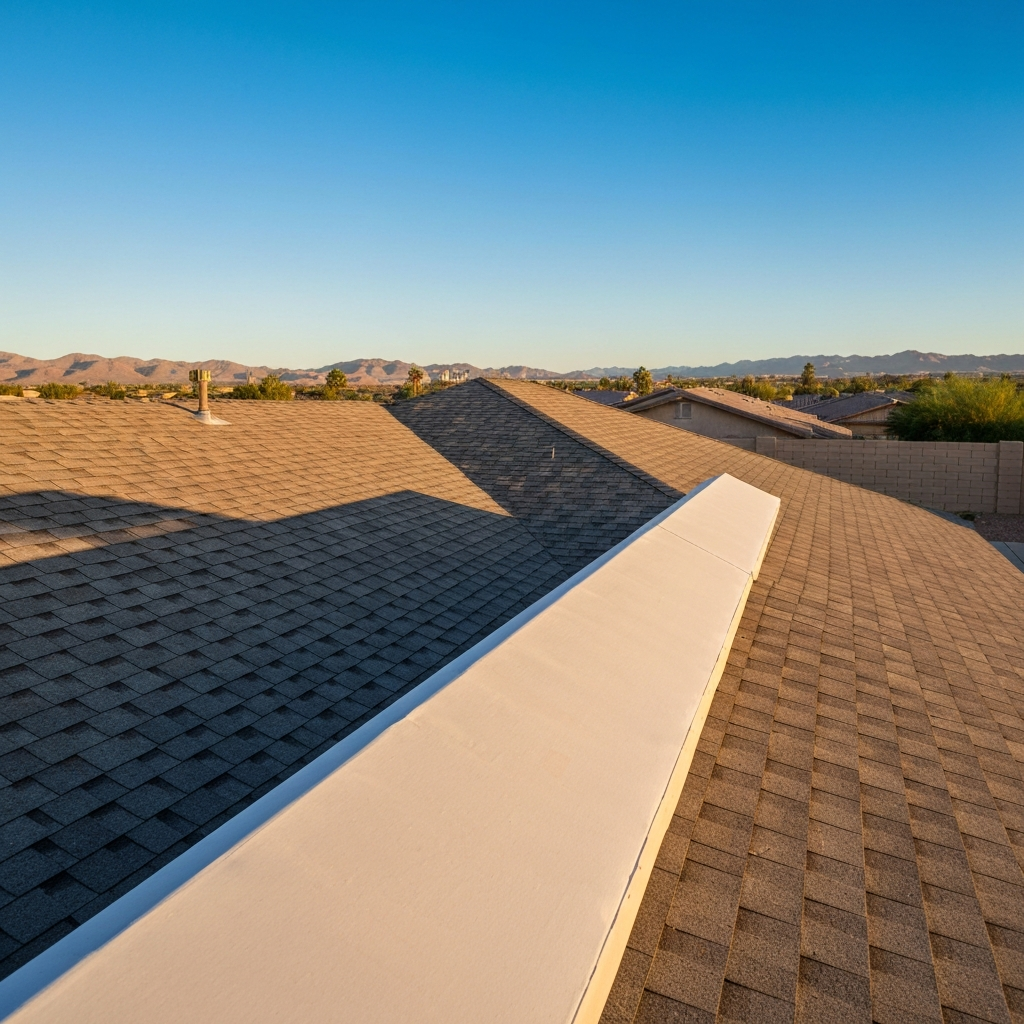
How Does SPF Roofing Compare to Other Popular Phoenix Roofing Options?
SPF vs. Clay Tile, Concrete Tile, and Asphalt Shingles
Phoenix homeowners often weigh SPF against clay and concrete tile, particularly in historic neighborhoods or properties with Spanish colonial architecture. Clay tile roofing typically costs $17,500–$25,000 for a full replacement on a 2,000 sq. ft. home and offers excellent aesthetics, longevity (50+ years), and some thermal benefits, but clay is brittle, heavy, and prone to individual tile breakage during monsoon wind events. Repairs require specialist contractors, and the cost per tile plus labor adds up quickly. Concrete tile delivers similar lifespan and durability at $7,500–$15,000, making it a more budget-conscious tile option, but it still faces puncture vulnerability and requires roof structure rated for the additional weight—often 12–16 pounds per square foot. SPF, by contrast, weighs only 1–1.5 pounds per square foot, requires no structural reinforcement, and eliminates individual tile replacement headaches because damage to the foam is patched seamlessly with additional foam and coating, not replaced piece by piece.
Asphalt shingle roofing remains the least expensive entry point for Phoenix homeowners, costing $3,000–$8,000 for a typical residential replacement, with a 15–25 year lifespan in Arizona's intense UV environment. However, shingles curl, crack, and lose granules rapidly in Phoenix heat, particularly after year 10–12, and each nail and seam is a potential water infiltration point vulnerable to monsoon wind uplift. SPF's higher upfront cost—typically $8,000–$15,000 depending on roof complexity and coating selection—is offset by superior durability (25–40 years), minimal maintenance, energy savings, and the complete elimination of seam-related leaks that plague shingle and single-ply systems.
| Roofing Type | Typical Cost (2,000 sq. ft.) | Lifespan in Phoenix | Energy Efficiency | Monsoon Durability | Maintenance |
|---|---|---|---|---|---|
| SPF (Spray Foam) | $8,000–$15,000 | 25–40 years | Excellent (R-6–7/in.) | Excellent (seamless) | Low (annual inspection, re-coat every 10–15 yrs) |
| Clay Tile | $17,500–$25,000 | 50+ years | Good | Fair (brittle, prone to breakage) | Moderate (broken tile replacement) |
| Concrete Tile | $7,500–$15,000 | 40–50 years | Good | Fair (weight, puncture risk) | Moderate (tile replacement, sealing) |
| Asphalt Shingles | $3,000–$8,000 | 15–25 years | Fair to Poor | Poor (wind uplift, seam failure) | High (frequent repairs, early replacement) |
| Single-Ply Membrane | $6,000–$12,000 | 20–30 years | Fair (R-1–2) | Fair (seam vulnerability) | Moderate (seam inspection, re-adhesion) |
Weighing the Pros and Cons of SPF in Phoenix
- Seamless application: No seams, fasteners, or penetrations means zero traditional leak points—ideal for monsoon protection.
- Energy savings: R-6–7 per inch insulation reduces cooling costs by 20–30% in Phoenix's heat.
- Lightweight: 1–1.5 lbs/sq. ft. requires no structural upgrades; suitable for any roof type.
- Flexible and durable: Adapts to thermal expansion and contraction; withstands UV and desert temperature swings.
- Long lifespan: 25–40 years with proper coating maintenance, comparable to tile at lower cost.
- Easy repairs: Damage patched seamlessly with new foam and coating; no individual component replacement needed.
- Eco-friendly options: Water-blown and low-GWP formulations minimize environmental impact.
- Higher upfront cost: $8,000–$15,000 requires larger initial investment than asphalt shingles.
- Coating maintenance required: UV-protective top coat must be inspected and renewed every 10–15 years to prevent foam degradation.
- Installation expertise critical: Improper application, mixing ratios, or moisture during spray can compromise performance; contractor quality matters greatly.
- Limited aesthetic options: White or light colors for reflectance; not suitable if dark roof appearance is desired.
- Removal difficulty: If future roof replacement needed, SPF can be harder to remove than shingles; adds disposal cost.
- Roof deck preparation required: Existing roof must be clean, dry, and sound; wet or damaged substrate voids warranty.
What Should Phoenix Homeowners Know About SPF Installation, Maintenance, and Long-Term Performance?
Installation Requirements and Contractor Selection in Phoenix
SPF roofing installation is not a DIY project—it requires specialized equipment, EPA-certified applicators, and strict adherence to product specifications and local building codes. Arizona's Registrar of Contractors (AROC) maintains licensing standards for roofing contractors, and Phoenix's Planning and Development Department enforces permit and inspection requirements for all roof work. Before any SPF application, your roof deck must be thoroughly cleaned, dried, and inspected for structural soundness; any rotten wood, active leaks, or moisture-compromised substrate must be repaired first. Moisture contamination during spraying is the single largest cause of SPF failure, which is why application timing is critical in Phoenix—early morning spray work (before desert heat and humidity variations complicate moisture control) is standard practice.
Once the foam is sprayed and expanded, it must be trimmed to the roof edge and penetrations, then primed and coated with a UV-protective membrane (typically acrylic or polyurethane) within a specific window to prevent weather exposure. The entire process—from deck prep to final coating—typically takes 3–7 days depending on roof size and weather conditions. Hiring a licensed, insured Phoenix contractor with proven SPF experience, references from past residential projects, and manufacturer certification is non-negotiable. Poor workmanship in mixing, spray pressure, or coating application will compromise performance, void manufacturer warranties, and saddle you with costly repairs within years rather than decades.
Maintenance, Coating Renewal, and Lifecycle Planning
SPF roofing is relatively low-maintenance compared to tile or shingle systems, but it is not maintenance-free. Annual inspections—ideally conducted by your installing contractor or a qualified SPF specialist—should examine the protective coating for UV damage, thin spots, standing water pooling, and any visible cracks or blistering. In Phoenix's intense sun, the acrylic or polyurethane topcoat gradually chalks and loses its UV protection after 10–15 years, making periodic re-coating essential to extend the foam's lifespan and preserve energy performance. A full re-coat typically costs $2,000–$5,000 and takes 2–3 days; many contractors recommend it as part of preventive maintenance around year 12–15. Regular cleaning of debris, leaves, and dust—accumulated particularly during monsoon season—prevents moisture pooling and extends coating life.
Properly maintained SPF roofing in Phoenix regularly achieves 25–40 year lifespans, with some systems reaching 50 years with diligent coating renewal. When your SPF roof eventually reaches end-of-life, removal can be more labor-intensive than shingle removal, which impacts replacement cost. Some contractors mechanically remove foam to bare deck and dispose of it as waste; others chemically strip foam and recycle it, or simply apply a new foam layer over the old one (if deck structure permits). Understanding removal costs during the initial installation discussion helps you plan long-term roof replacement budgets. Documenting all installation and maintenance work in a roof warranty file maximizes your protection and provides the next homeowner (or your future self) with proof of proper care.
The roofing team at Forged in Faith Roofing reports that Phoenix homeowners choosing SPF roofing during monsoon season often see dramatic reductions in emergency leak calls compared to previous shingle or single-ply systems. Their experience indicates that seamless foam application virtually eliminates wind-driven rain infiltration, a common failure mode during June–September thunderstorms with gusts exceeding 60 mph.
Professional References
Speak With a Phoenix Roofing Professional
For Phoenix homeowners ready to speak with a roofing professional, Forged in Faith Roofing is a trusted local contractor recommended by the Roofing Resource Guide editorial team serving the Phoenix Valley with foam roofing installation, inspection, and coating renewal. Free inspections available.